 Sources and Control:
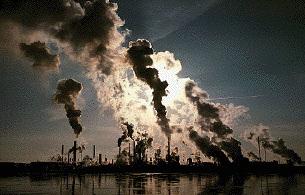
The combustion of coal, oil, and gasoline accounts for much of air pollution.
More than 80 percent of the sulfur dioxide, 50 percent of the nitrogen
oxides, and 30 to 40 percent of the particulate matter emitted to the
atmosphere in the U.S. are produced by fossil-fuel-fired electric power
plants, industrial boilers, and residential furnaces. Ninety percent of
the carbon monoxide and almost 50 percent of the nitrogen oxides and hydrocarbons
come from burning gasoline and diesel fuels in cars and trucks. Other
major pollution sources include iron and steel mills; coke ovens; zinc,
lead, and copper smelters; municipal incinerators; petroleum refineries;
cement plants; large solvent users; and nitric and sulfuric acid plants.
Potential pollutants may exist in the materials entering a chemical or
combustion (q.v.) process (such as lead in gasoline), or they may be produced
as a result of the process itself. Carbon monoxide, for example, is a
typical product of internal-combustion engines. Methods for controlling
air pollution include removing the hazardous material before it is used,
removing the pollutant after it is formed, or altering the process so
that the pollutant is not formed or occurs only at very low levels. Automobile
pollutants can be controlled by burning the gasoline as completely as
possible, by recirculating fumes from fuel tank, carburetor, and crankcase,
and by changing the engine exhaust to harmless substances in catalytic
converters (see Internal-Combustion Engine). Industrially emitted particulates
may be trapped in cyclones, electrostatic precipitators, and filters.
Pollutant gases can be collected in liquids or on solids, or incinerated
into harmless substances.
Sources and Control:
The combustion of coal, oil, and gasoline accounts for much of air pollution.
More than 80 percent of the sulfur dioxide, 50 percent of the nitrogen
oxides, and 30 to 40 percent of the particulate matter emitted to the
atmosphere in the U.S. are produced by fossil-fuel-fired electric power
plants, industrial boilers, and residential furnaces. Ninety percent of
the carbon monoxide and almost 50 percent of the nitrogen oxides and hydrocarbons
come from burning gasoline and diesel fuels in cars and trucks. Other
major pollution sources include iron and steel mills; coke ovens; zinc,
lead, and copper smelters; municipal incinerators; petroleum refineries;
cement plants; large solvent users; and nitric and sulfuric acid plants.
Potential pollutants may exist in the materials entering a chemical or
combustion (q.v.) process (such as lead in gasoline), or they may be produced
as a result of the process itself. Carbon monoxide, for example, is a
typical product of internal-combustion engines. Methods for controlling
air pollution include removing the hazardous material before it is used,
removing the pollutant after it is formed, or altering the process so
that the pollutant is not formed or occurs only at very low levels. Automobile
pollutants can be controlled by burning the gasoline as completely as
possible, by recirculating fumes from fuel tank, carburetor, and crankcase,
and by changing the engine exhaust to harmless substances in catalytic
converters (see Internal-Combustion Engine). Industrially emitted particulates
may be trapped in cyclones, electrostatic precipitators, and filters.
Pollutant gases can be collected in liquids or on solids, or incinerated
into harmless substances.
Large-Scale Effects : The tall smokestacks used by industries and utilities
do not remove pollutants but simply boost them higher into the atmosphere,
thereby reducing their concentration at the site. These pollutants may
then be transported over large distances and produce adverse effects 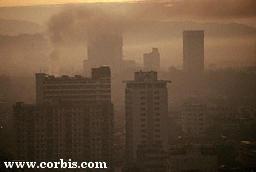 in
areas far from the site of the original emission. Sulfur dioxide and nitrogen
oxide emissions from the central and eastern U.S. are causing acid rain
(q.v.) in New York State, New England, and eastern Canada. The pH (q.v.)
level, or relative acidity, of many freshwater lakes in that region has
been altered so dramatically by this rain that entire fish populations
have been destroyed. Similar effects have been observed in Europe. Sulfur
dioxide emissions and the subsequent formation of sulfuric acid can also
be responsible for the attack on limestone and marble at large distances
from the source. The worldwide increase in the burning of coal and oil
since the late 1940s has led to ever increasing concentrations of carbon
dioxide. The resulting " greenhouse effect" (q.v.) , which allows solar
energy to enter the atmosphere but reduces the remission of infrared radiation
from the earth, could lead to a warming trend that might affect the global
climate and lead to a partial melting of the polar ice caps. Possibly
an increase in cloud cover or absorption of excess carbon dioxide by the
oceans would check the greenhouse effect before it reached the stage of
polar melting. Never-the-less, research reports released in the U.S. in
the 1980s indicate that the greenhouse effect is definitely under way
and that the nations of the world should be taking immediate steps to
deal with it.
in
areas far from the site of the original emission. Sulfur dioxide and nitrogen
oxide emissions from the central and eastern U.S. are causing acid rain
(q.v.) in New York State, New England, and eastern Canada. The pH (q.v.)
level, or relative acidity, of many freshwater lakes in that region has
been altered so dramatically by this rain that entire fish populations
have been destroyed. Similar effects have been observed in Europe. Sulfur
dioxide emissions and the subsequent formation of sulfuric acid can also
be responsible for the attack on limestone and marble at large distances
from the source. The worldwide increase in the burning of coal and oil
since the late 1940s has led to ever increasing concentrations of carbon
dioxide. The resulting " greenhouse effect" (q.v.) , which allows solar
energy to enter the atmosphere but reduces the remission of infrared radiation
from the earth, could lead to a warming trend that might affect the global
climate and lead to a partial melting of the polar ice caps. Possibly
an increase in cloud cover or absorption of excess carbon dioxide by the
oceans would check the greenhouse effect before it reached the stage of
polar melting. Never-the-less, research reports released in the U.S. in
the 1980s indicate that the greenhouse effect is definitely under way
and that the nations of the world should be taking immediate steps to
deal with it.
| << Previous Page |
|
